SEO, Mobile UX, and Email: Making a Snacky Splash
Background:
A fledgling company started by an industry titan engaged DMi to help establish a strong competitive position in the healthy snacking space. DMi’s SEO team rolled up its sleeves to build a keyword strategy to achieve those goals and quickly ran into a blocker: a rigid, outdated website that would keep the client out of compliance with Google’s mobile-focused indexing guidelines.

The Goal
The client’s goal in engaging DMi was to increase organic traffic, sales, and revenue from core keywords, with a secondary goal of leveraging the increased search traffic to grow email subscriptions and sales.
The Plan
Phase 1 of our plans was defining our keyword strategy by researching search terms that balanced high traffic potential with low ranking difficulty based on the client website’s existing web authority and content relevance. Google ranks search results by “how relevant a site’s content is to the keyword/phrase that is searched” and “how trustworthy/authoritative websites are in comparison to other sites in similar space.” Knowing a website’s initial level of authority and volume of content helped us pinpoint keywords that would allow the site to make significant rankings gains.
Before we could execute Phase 1, a blocker emerged. Google’s latest rankings guideline updates made the site’s existing design noncompliant, particularly with mobile performance, and the website’s outdated architecture prevented the DMi team from quickly implementing on-site optimizations. We quickly recognized the need to get the website into compliance with Google’s indexing guidelines with a specific focus on improving mobile user experience – which would help us improve mobile core web vitals and give the brand a competitive edge over its competitors.
The client agreed to bring on DMi’s Web Dev team to help build a better site foundation. The Web Dev team added Google-compliant customizations to existing templates based on Search team guidance, while the Search team mapped and incorporated target keywords into pages and images to improve accessibility metrics.
DMi teams combined to customize JavaScript delivery for improved load time and to smooth out CSS conflicts, while the Search team created optimized video and image assets from site’s existing assets to better serve across mobile browsing.
To prevent loss of backlinks and site authority during migration (in April-May 2023), the Search team mapped all source URLs to their destination URLs, set up redirect rules server-side, and kept both domains of the website on Google as the search engine gradually replaced pages of the old domain with the new old domain.
To correct persistent GA4 tracking issues that were clouding the client’s understanding of channel performance, the Search team set up temporary conversion events, while the Web and Search teams strategized with the client’s tracking partner to troubleshoot and set up granular event tracking using product SKUs.
Last, the Search team worked with our Email colleagues to test newsletter signup pop-up conversion rates. The goal was to increase sign-ups for the email list while staying within SEO best practices.
The Results
In the first 12 months of working with DMi, the client achieved:
77%
Increase in Organic Traffic
112%
Increase in Organic Engagement
74%
Increase in New Site Visitors From Organic Channels
71%
Increase in Organic Sales
79%
Increase in Organic Revenue
4%
Increase in Organic AOV
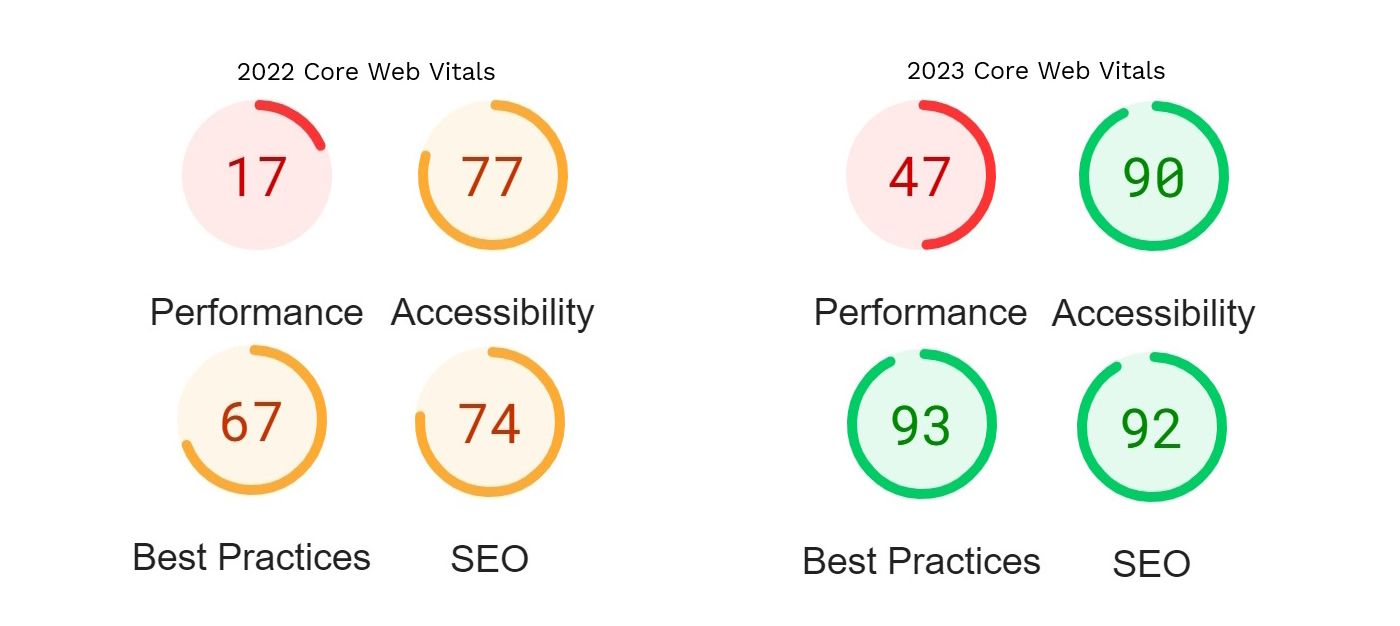
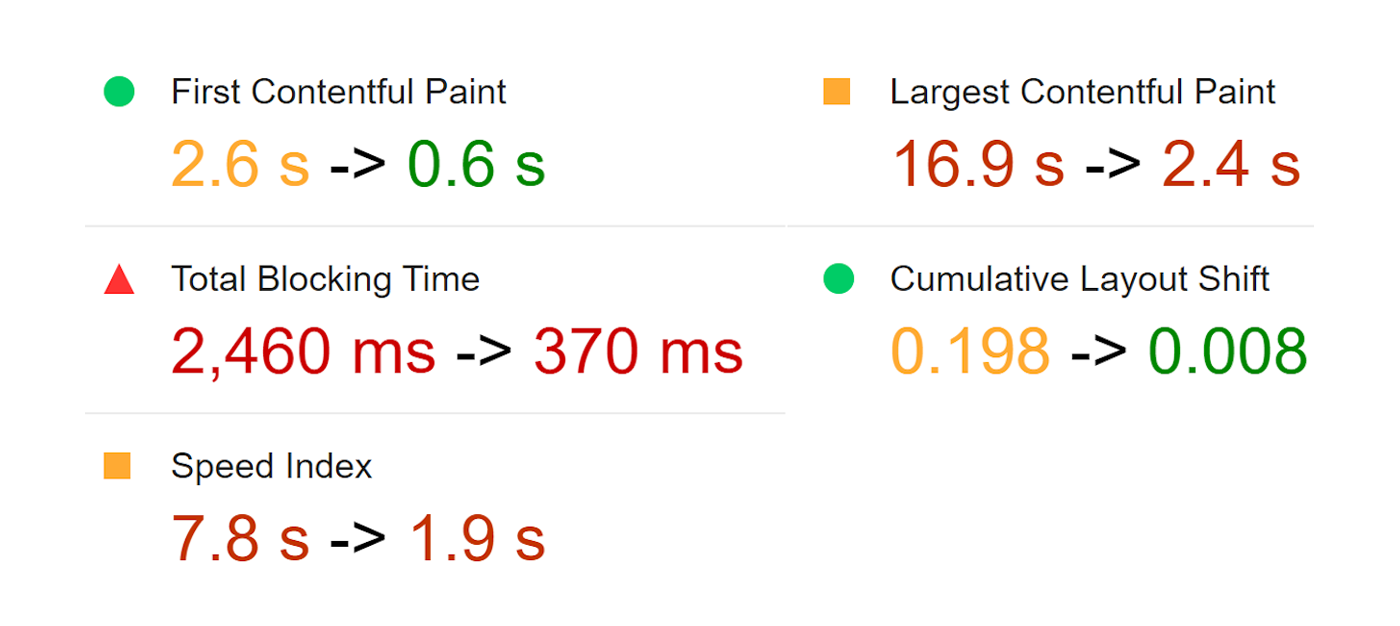
The client’s site also registered huge Core Web Vitals improvements from the spring 2023 domain migration, and significant improvement in Google’s site speed performance metrics:
Opens the contact form dialog
Opens in a new tab