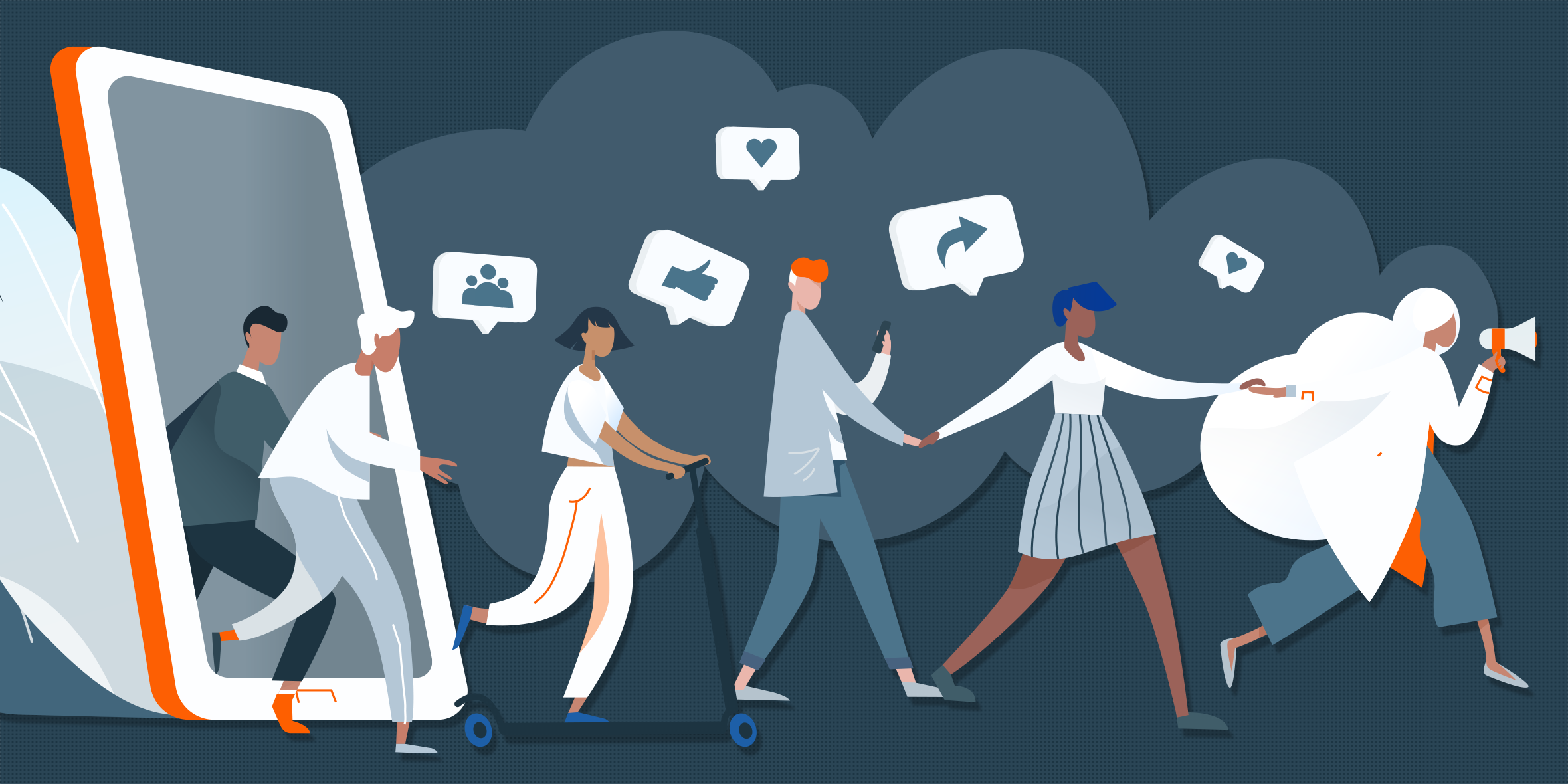
Influencer marketing, which is the practice of using popular social media users to promote a brand, product, or service by adding the social media user’s personal seal of approval, works in a way that direct sales tactics don’t. Statista predicts that global influencer marketing will grow to $21.2B in 2023, more than double what it was in 2020 ($9.7B).
The idea of influencer marketing has been around for ages – think of every athlete who’s ever graced the cover of a Wheaties box, or Ronald Reagan in a Chesterfield ad. While the formats have changed, the concept has only strengthened over time.
Of course, it’s not as simple as paying today’s splashiest influencers a ton of money to push your product. Before you spend a dollar to leverage the clout of influencers on your brand or client’s behalf, you need to learn the principles that the most successful influencer programs all have in common.
Let’s dig into what it takes to build a high-performing influencer program: the goals, expectations, channels, and influencer alignment to establish and the pitfalls to avoid along the way.
The benefits of good influencer marketing
Before we get to the how-to part of influencer success, let’s establish the stakes. Good influencer marketing can reach new audiences, grow product/brand awareness, increase the brand’s level of trust and credibility, and grow sales numbers with both new and repeat customers. In short: full-funnel marketing.
That’s a lot of benefits. But there are a couple of secondary goodies to throw in as well: increases in a brand’s social following, and the opportunity, if the influencer relationship has good two-way communication, to get on-the-ground customer feedback on the products and services being marketed.
When to launch an influencer marketing program
Given the above, it might be tempting to jump into influencer marketing without regard for the current state of your marketing. But not everyone needs to invest time and money in influencer marketing. Instead, look for at least one of the following conditions to start seriously considering your influencer options:
You’re trying to increase brand awareness.
This is the most often-cited goal of brands getting started in the influencer space. Yes, influencer marketing can lead (sometimes very substantially) to sales and revenue, but its ability to draw awareness to the brand, product, or service being promoted is key.
You’re trying to reach a new audience or demographic.
Influencers who are a great fit for your brand and bring plenty of new users into your fold are great assets. This can be an especially powerful combo with a new release aiming to hit a different demographic – for instance, for a brand like Hims, leveraging an influencer known for speaking candidly about mental health would be a strategic choice to expand from its line of physical healthcare products into anxiety-related treatments.
You’re looking to build more of a connection with your current audience.
It’s a skeptical world out there, particularly when it comes to advertising. People trust influencers a lot more than they do traditional marketing, so if you’re struggling to connect with your audience, using the clout of influencers can be a good option – particularly if their approach is to educate users and focus less on direct sales.
You’re looking to lower creative production load.
If you’re looking to bring celebrities (or micro-celebrities) into the fold without a lot of outlay for a full photo or video shoot, influencer is a great alternative. Not only are influencers often working in their own preferred (self-made) setting, they’re typically great at creating imagery and videos of products in use that (given the right contractual set-up) you can re-purpose in other campaigns.
How to set the right goals: influencer marketing KPIs
By this point, you should have an idea of whether the time is right for you to lean into influencer marketing. If it’s a green light, the next step is to outline clear goals for your campaigns.
The most successful campaigns focus on one of two overarching themes: either brand awareness or revenue generation.
For brand awareness, influencer marketing KPIs can include reach and engagement (which you can get right from the influencer’s posts – metrics can include reach, likes, comments, etc.). A secondary metric here can be gauging the lift in a brand’s social media following in the 24-48 hours after the influencer publishes content.
For revenue generation, marketers can look at the influencer’s affiliate links (custom-made for each campaign) and check back-end data in GA4 and/or the brand’s CRM to measure KPIs like clicks, purchases, and revenue. One thing to note here: results may ultimately vary based on the brand’s attribution models – e.g. if the brand is stuck on last-touch, and the user converts elsewhere after learning about the brand or product through an influencer, the campaign’s true impact may be muted. For this group of marketing KPIs in general, it’s best to measure impact over a long time period – up to a full year – after the start of the campaign.
How to set expectations for your influencer marketing program
Even if you’re gung-ho about starting or doubling down on influencer campaigns, you might need to get buy-in from others in your organization. Doing this effectively means setting the right expectations, both in what investments you’ll need to make and what you expect to gain.
To start, nail down what “investing” means for you. When deciding on what you’re willing to invest to launch your influencer campaign, you’ll have options including product discounts or giveaways (to the end user) and flat fees or sales commissions (to the influencer).
Next, establish what you’re asking the influencer to do for your payment. Make sure you create an agreement that guarantees your brand will receive whatever you’ve deemed most valuable – perhaps that’s a certain number of posts or placements over a defined period of time.
Remember that product giveaways (unless you have a VERY high-price-point item) are rarely seen as payment by influencers; they’re more like table stakes to get an influencer’s attention. If a giveaway results in an influencer promotion, that’s a bonus – which is something your brand colleagues need to understand as well.
Last, remind yourself and your colleagues that most people don’t buy the first time they see a new product; it takes repeated instances before they purchase. With that in mind, the most effective influencer partnerships are generally longer-term, so make sure you’re reflecting that in your time and budget expectations.
How to find the right influencers for your program
The best influencer for your brand, product, or service isn’t necessarily the biggest one; it’s the best fit. That fit is determined by a few factors:
- Do they believe in your product/brand?
- Is your product/brand a natural fit for their personal brand?
- Is their audience ready to engage in a way that fits your predefined goals? (Influencers should be able to provide data to answer this.)
Building a list of potential influencers can be fairly straightforward. One way is to look for creators who have built a brand related to what you’re selling. For instance, creators talking about fitness, health, and wellness would be a great match for your supplement brand. Distance athletes would be natural spokespeople for your herbal pain relief rub. Grillmasters could appreciate the attributes of your line of patio furniture. If your product seems like a natural fit for their persona, it’s a great place to start.
Speaking of personas, one of the things we recommend at DMi partners is to create an ideal influencer persona, just as many marketers do for their ideal customers.
What do they do, eat, and wear? What are their hobbies? How do they relate to their audiences? Creating something like this will help you hone in on your ideal influencer pool. Here’s an example of a persona we created for a client on Instagram:
- Foodie and/or young mom
- Age range: 30-40 years old
- Traditionally aspirational: Think upper-middle class, suburban, clean + organized, thoughtfully curated, presentable, and polished
- Down to earth: The “vibe” they give off is first and foremost relatable! They come across as “real,” uplifting, wholesome and community-oriented
- Busy but balanced: They juggle a lot of things in their life (family, parenting, maintaining their home, cooking, traveling, or always being on the go) but still prioritize balance for themselves (and their health)
How to find the right channels for your influencer marketing program
Each creator tends to have a favorite channel (e.g. blog, Substack, Instagram, TikTok, Pinterest, Facebook, YouTube) where they see the most engagement, so asking that question early and making sure the channel is a good fit for your primary goal and/or any specific demographics you’d like to reach is important.
Once you’ve defined your goals, you should have a good idea of the channels that align best (e.g. for education, an influencer with a popular blog is a great fit). The trick is to triangulate your goals with the right influencer – who happens to prefer a channel that works well with your prioritized KPIs.
Mistakes to avoid in launching an influencer marketing campaign
Many brands have taken the plunge in influencer marketing and come up with little to show for it except wasted resources. In these cases, one of these three issues is usually at the root of the problem:
The brand picked an “it” influencer or an influencer with a massive audience without assessing the influencer’s fit for the brand/product. This is potentially more damaging than seeing poor performance; it has the potential to muddy both the brand and influencer’s image. (Think: a lifestyle-on-a-budget guru pitching a high-end jewelry item.)
The brand picked the wrong platform for its positioning or campaign goal. Much like brands can be susceptible to picking the “it” influencer, they can pick the “it” platform regardless of its fit with their product or goals. “We should be on TikTok” is a mandate a lot of marketers have gotten over the past two years, for example, and if the goal is to expand into a demographic that’s not particularly active on the platform, the campaign has little shot to succeed.
The brand is trying to hit multiple goals with a single campaign. This is not a problem or limitation exclusive to influencer marketing, but marketers trying to build deeper connections with their audience and drive massive revenue gains, for instance, will be disappointed in the results of at least one of the goals. For maximum impact, focus on one goal – or, at most, two closely related ones.
Wrapping up
If you can’t tell, we’re bullish about the power of influencer marketing (when it’s done right) to drive powerful results for our brands. Influencer marketing’s landscape – platforms, influencers, offers – is an especially dynamic one even for digital marketing, so make sure you’re up to speed on the latest when you decide to take the plunge. If you’d like experts to guide you along the way, we’re always happy to help – just reach out to info@dmipartners.com to start a conversation
DMi Partners is a full-service digital marketing agency headquartered in Philadelphia. DMi has excelled in managing award-winning campaigns for recognized consumer, B2B and ecommerce brands since 2003. Its innovative email and affiliate management accompany an arsenal of digital services including SEO, paid search, ecommerce, branding and interactive, social media marketing and advanced marketing analytics designed to engage target audiences to drive revenue.
Staffed by big agency talent and offering the personal attention and agility of a boutique, DMi has a proven track record of delivering the highest quality marketing strategy, execution and results. Learn more by visiting dmipartners.com or contact info@dmipartners.com.

opens contact form
opens in a new tab
toggles visibility of form to submit resume
remove added file
