We’ve all sat through it: click through a slide deck, watch a recorded meeting at 1.5x speed, answer a couple of quiz questions, and forget half of it by lunch. Training happens. Learning doesn’t always.
Whether it’s a full learning and development team or a single HR person wearing ten hats, the goal is the same: turn what subject matter experts know into learning experiences people actually remember, and hopefully even enjoy. That doesn’t require becoming an expert in every facet of digital marketing. It requires partnering with the people who already are, and packaging what they know into something clear, engaging, and approachable for someone learning it for the first time.
Before building a single course, three questions matter more than anything else:
- What does the learner need to know?
- What do they need to be able to do afterward?
- And the one that matters most, why should they care?
Most people aren’t sitting through training to pass a test. They’re trying to solve a problem, do their job better, or avoid a mistake. If the training can’t answer “how will this help me” early, it’s already lost them.
Start With the Learner, Not the Content
It’s easy to fall into the trap of thinking everything is important when working with a subject matter expert (SME) who knows their space inside and out. Usually, it is. But cram it all into one course and learners walk away remembering very little.
Our brains can only hold so much new information at once. So instead of building one giant “Affiliate Marketing 101,” ask what someone actually needs to do after the training. Do they need to recognize different publisher types? Navigate a new network? Understand a policy? Once the outcome is clear, deciding what stays and what can wait gets a lot easier.
Approach training the same way you eat a pizza. Take it one slice at a time rather than trying to eat the whole pie at once.
Make Learning Interactive
Reading slides, watching videos, and listening to a presenter are all forms of passive learning. It has its place, but usually just as a starting point.
Active learning asks something of the learner by giving them prompts to fulfill such as: sort publisher types into categories, work through a real scenario, spot a policy violation, answer a reflection question they’ll actually discuss with their manager, etc. Visuals, light gamification, and interactive exercises all help, but never just to make something “feel fun.” Every exercise should be built to practice a decision the learner will eventually make on the job.
Immediate feedback is where a lot of the real learning happens. Whether someone gets it right or wrong, that moment is a chance to reinforce the concept while it’s still fresh, instead of just clicking “Next” twenty times in a row.
Choose the Right Format
Not every topic needs a full eLearning course, and not every course should look the same. This matters just as much for a lean, one-person operation as it does for a full training team, since the format is what determines how much time and effort a course actually takes to build.
Showing someone how to navigate an affiliate network? A short video or step-by-step visual guide usually does it. Rolling out a new platform feature, policy, or soft skill? A five-minute microlearning is often plenty, and most people can find five minutes far more easily than fifty. Interactive courses are best for practicing decisions or applying a concept to a scenario. Job aids make great references for processes and checklists. And live sessions still matter when the goal is real discussion or coaching.
Stripping out friction matters too. Clear navigation, simple language, intuitive interactions: the less energy a learner spends figuring out the course, the more they have left for the content.
There isn’t one “best” format. There’s only the format that fits the objective.
Learning in Action
Below are two simple interactions built to put “learning by doing” into practice.
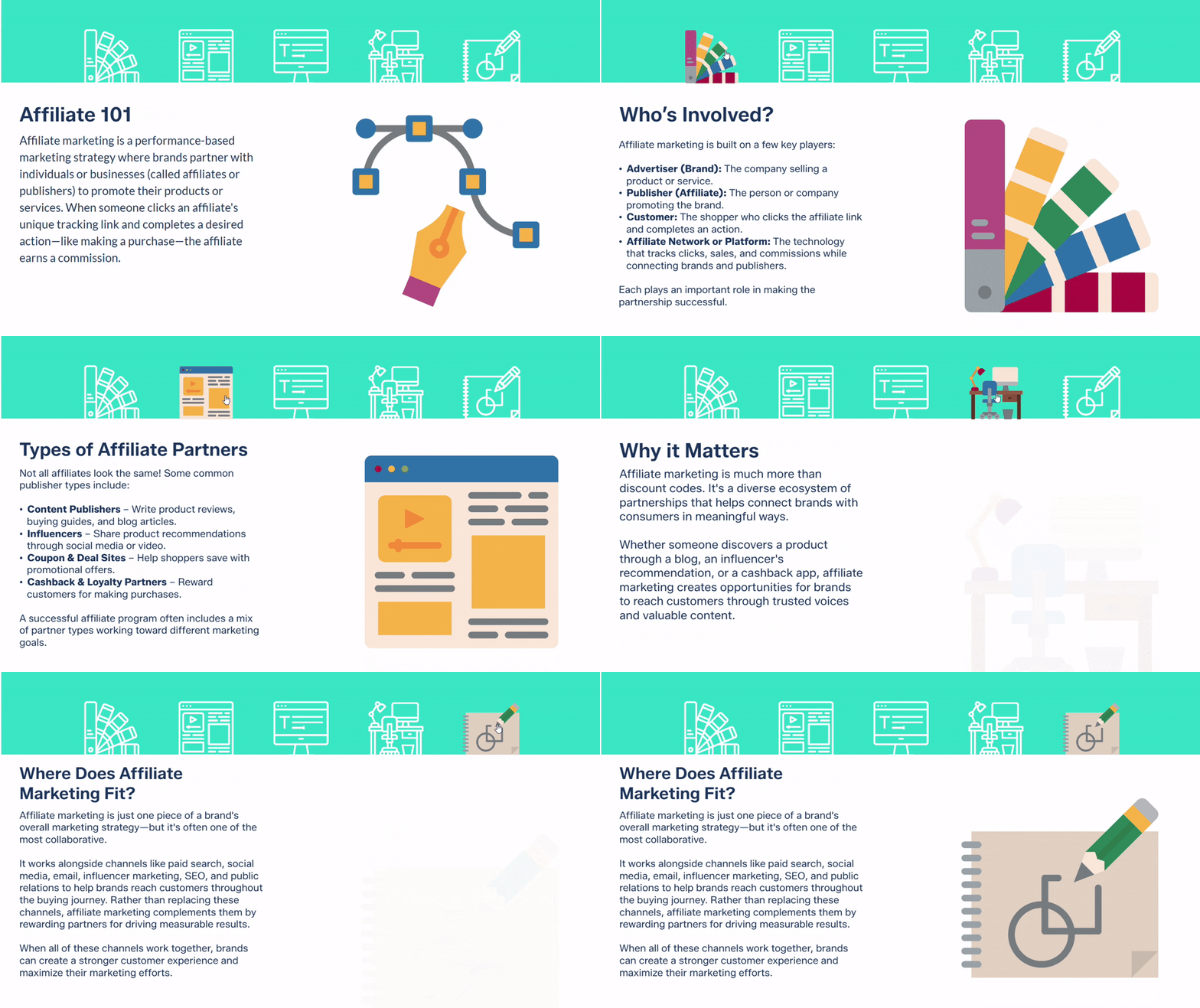
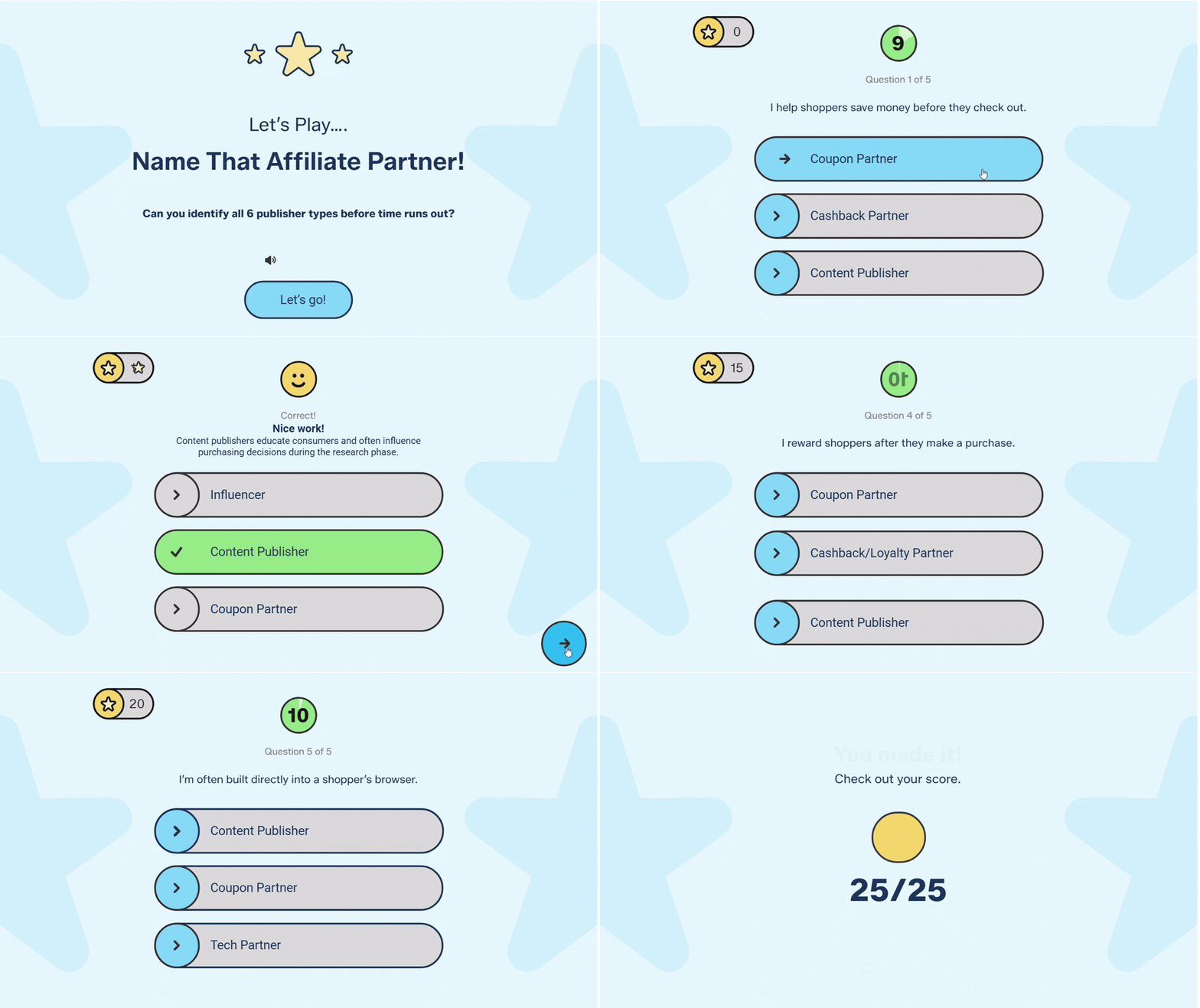
Instead of just reading information, learners are making a decision, getting immediate feedback, actively engaging. Small moments like these are what make training memorable, and occasionally, a little fun.
Great Learning Doesn’t End When the Course Does
Learning doesn’t stop at the final slide or the passing quiz score. The training that actually sticks gets reinforced afterward through conversations with managers, job aids, chances to practice, and real-world experience. A course can introduce a concept, but using it is what builds confidence.
That’s also why good training is never really “finished.” Digital marketing moves fast. Platforms update, policies change, best practices shift. Gathering feedback, fielding questions after launch, and updating training regularly keeps it useful instead of stale, whether that’s one person’s job or a whole team’s.
Final Thoughts
Boiled down, the approach comes down to five principles:
- Start with the learner
- Keep it focused
- Choose the format that fits the objective
- Give people room to practice
- Design for the real world, not just the quiz
Digital marketing moves fast enough that platforms sometimes update before a course is even finished. But great training design was never about capturing every possible detail. It’s about giving people the confidence and skills to keep learning long after the course ends.
At the end of the day, great training isn’t measured by completions or quiz scores. It’s measured by what happens after: when someone makes a better decision, solves a problem faster, or says, “I actually knew what to do because of that training.” That’s when it sticks, whether it comes from a dedicated training team or a single person doing their best to build it alone.
DMi Partners is a full-service digital marketing agency headquartered in Philadelphia. DMi has excelled in managing award-winning campaigns for recognized consumer, B2B and ecommerce brands since 2003. Its innovative email and affiliate management accompany an arsenal of digital services including SEO, paid search, ecommerce, branding and interactive, social media marketing and advanced marketing analytics designed to engage target audiences to drive revenue.
Staffed by big agency talent and offering the personal attention and agility of a boutique, DMi has a proven track record of delivering the highest quality marketing strategy, execution and results. Learn more by visiting dmipartners.com or contact info@dmipartners.com.

Opens the contact form dialog
Opens in a new tab