
Allocating the right levels of budget to the channels driving truly incremental growth is one of the biggest factors in capitalizing on the Q4 buying rush.
Brands know full well the importance of smart budgeting, but that’s no guarantee they’ll follow a process that improves their allocation. In this post, I’ll cover three keys to designing an optimal media mix:
- Reports and tests to run to indicate channel overspending or underspending
- Best set-up practices for those reports
- How to measure top-of-funnel campaign value
- Mistakes to avoid in designing budget allocations
Let’s start with reports and tests.
Reports and tests to identify channel spending overspending or underspending
I’ve got two fundamental reports/tests to run to help inform opportunities for more effective budget allocation. They are:
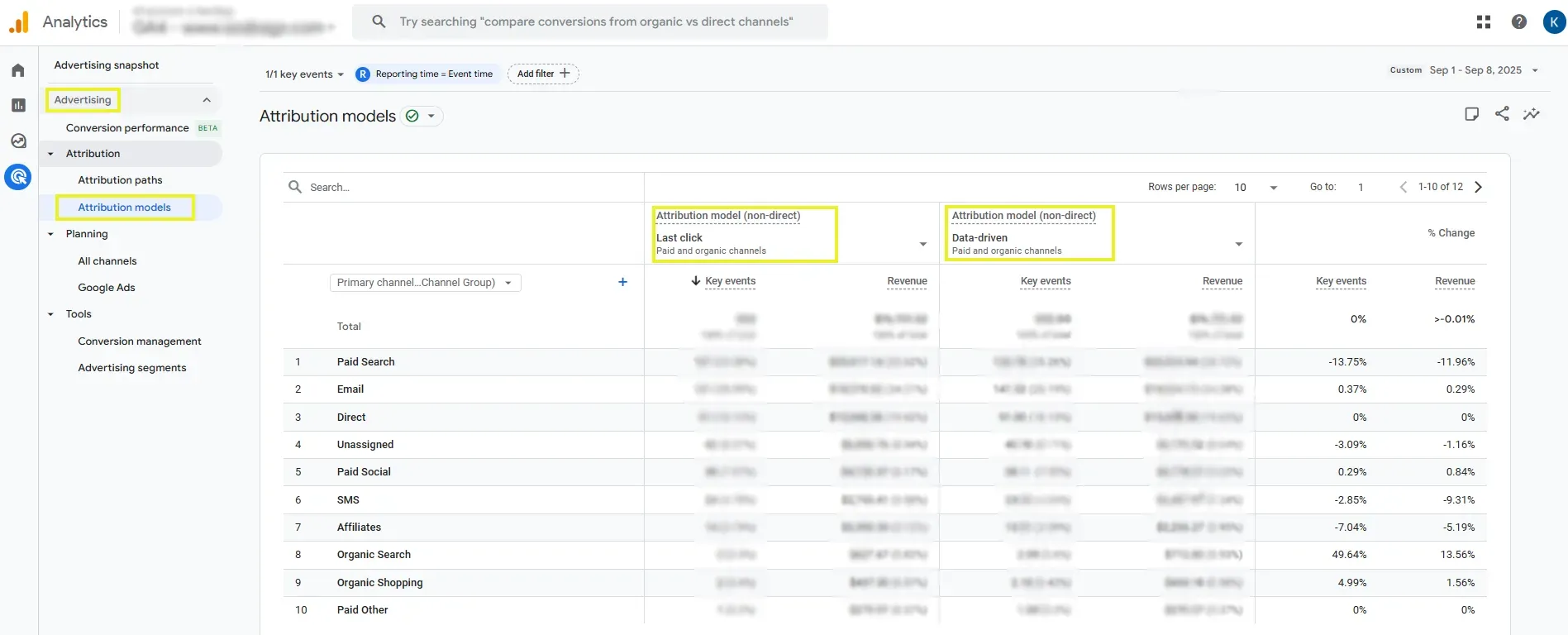
Cross-channel attribution/path reports. In Google Analytics, use the reports in the “Advertising” section to get valuable cross-channel reports. Try comparing how channels look with multiple attribution models in this section, and try changing the default view of the report from the Default Channel to Medium/Campaign so you can see your stats by marketing channel and campaign (which, for affiliate, should be the publisher ID, if you have set up your UTMs correctly).
Lift tests: Studies showing the impact when budget for a specific channel is eliminated or increased to a measurable audience can produce some great insights. You can also test the results of spending more/less in certain channels before making a wholesale change to your mix, which I highly recommend doing ahead of Q4. Google offers this with their Conversion Lift tool, and Meta offers it with their Lift Test features.
A note here: if efficiency improves with higher spend within a channel, it’s an indication of underspending. Brands looking for scale within target CPAs will also be interested to learn which channels can maintain efficiency when spend increases.
Best practices for setting up reports and tests
I’ve seen many a brand conduct tests and run reports with better budgeting as the goal – but fail to realize any impact because of faulty set-ups. Follow these tips for better results.
- Sync up your attribution window across platforms.
- Normalize metrics (e.g. CAC, Lifetime Value, Incremental ROAS) across platforms. Don’t put too much stock in metrics that are unique to the platform that can’t be used across channels.
- Automate everything you can. The biggest limitations to conducting these analyses are often at the human level rather than the data level – that is, when the team doesn’t have the bandwidth to manually download reports, run analyses, and diagnose strategic recommendations. There’s a number of tools that help with the heavy lifting; my agency automates a lot of this through our data integrations with Looker.
Once your analyses are buttoned up, you’ll have a better picture of where to invest more or pull back. There’s another layer beyond performance-based channels, however, that you need to account for in your budgeting – namely, upper-funnel (or discovery) channels that rely on different methods and metrics to be properly assessed. This leads me to…
How to measure top-of-funnel channel impact
Popular top-of-funnel channels include CTV, OOH, programmatic, PR and performance PR, and awareness campaigns in social media. They’re not designed to directly convert; their purpose is to build brand awareness and affinity with users earlier in the purchase journey.
That means you can’t assess those channels based on performance; instead, treat them as portfolio stabilizers. They may not win on last-click attribution (which, as I’ll explain, I recommend you scrap as a measurement option), but they expand the top of the funnel, making every other channel more efficient. The mistake is not in funding them, but in evaluating them by the wrong KPI.
As for those KPIs, I like running analyses on brand search volume and direct website traffic. Do those numbers increase with increased investments in awareness campaigns? Conversely, does cutting budget in those channels curtail volume and/or efficiency down the funnel? (This is another use case for the lift tests described above.)
Before you make any decisions on cutting or increasing investment in awareness channels, do some legwork to understand their current impact in your channel mix, and make sure you’re communicating the difference in KPIs to your managers, who may naturally favor channels showing more linear conversion impact.
Mistakes to avoid in designing budget allocations
Remember that note about last-click attribution? Relying on that metric might produce easy-to-digest “insights,” but because it ignores the impact of every channel’s previous touchpoint with a user, it funnels disproportionate dollars into bottom-of-funnel channels like brand search, retargeting, and direct-response paid social. Instead, adopt multi-touch or incrementality-based metrics that take your full portfolio into account.
The next most common mistake I encounter is brands neglecting to carve out test-and-learn budgets, instead pre-allocating every dollar in familiar and already-running initiatives. Leaving no budget to explore new partners and platforms is risky in any environment and especially so in digital marketing, where even established platforms like Google are constantly introducing new features and ad types that your competitors may pounce on to realize early-adoption benefits. Make sure you’re carving out 5-10% of your budget consistently for controlled experiments. If you’re not comfortable doing this during the holidays, I recommend testing aggressively in the lead-up period so you can spot new growth opportunities that will pay off big-time as buying intent swells.
Last, don’t let year-over-year patterns dictate your current plans on their own; take recent performance into account as well.
Closing out
In general, don’t aim for perfection with budgeting (you won’t get there). Even directional data is useful in reallocating spend where it will have a bigger impact. My best advice for you is to start incorporating what you can as soon as you can; even small insights can pay off many times over in your busiest season.
DMi Partners is a full-service digital marketing agency headquartered in Philadelphia. DMi has excelled in managing award-winning campaigns for recognized consumer, B2B and ecommerce brands since 2003. Its innovative email and affiliate management accompany an arsenal of digital services including SEO, paid search, ecommerce, branding and interactive, social media marketing and advanced marketing analytics designed to engage target audiences to drive revenue.
Staffed by big agency talent and offering the personal attention and agility of a boutique, DMi has a proven track record of delivering the highest quality marketing strategy, execution and results. Learn more by visiting dmipartners.com or contact info@dmipartners.com.

opens contact form
opens in a new tab
toggles visibility of form to submit resume
remove added file
